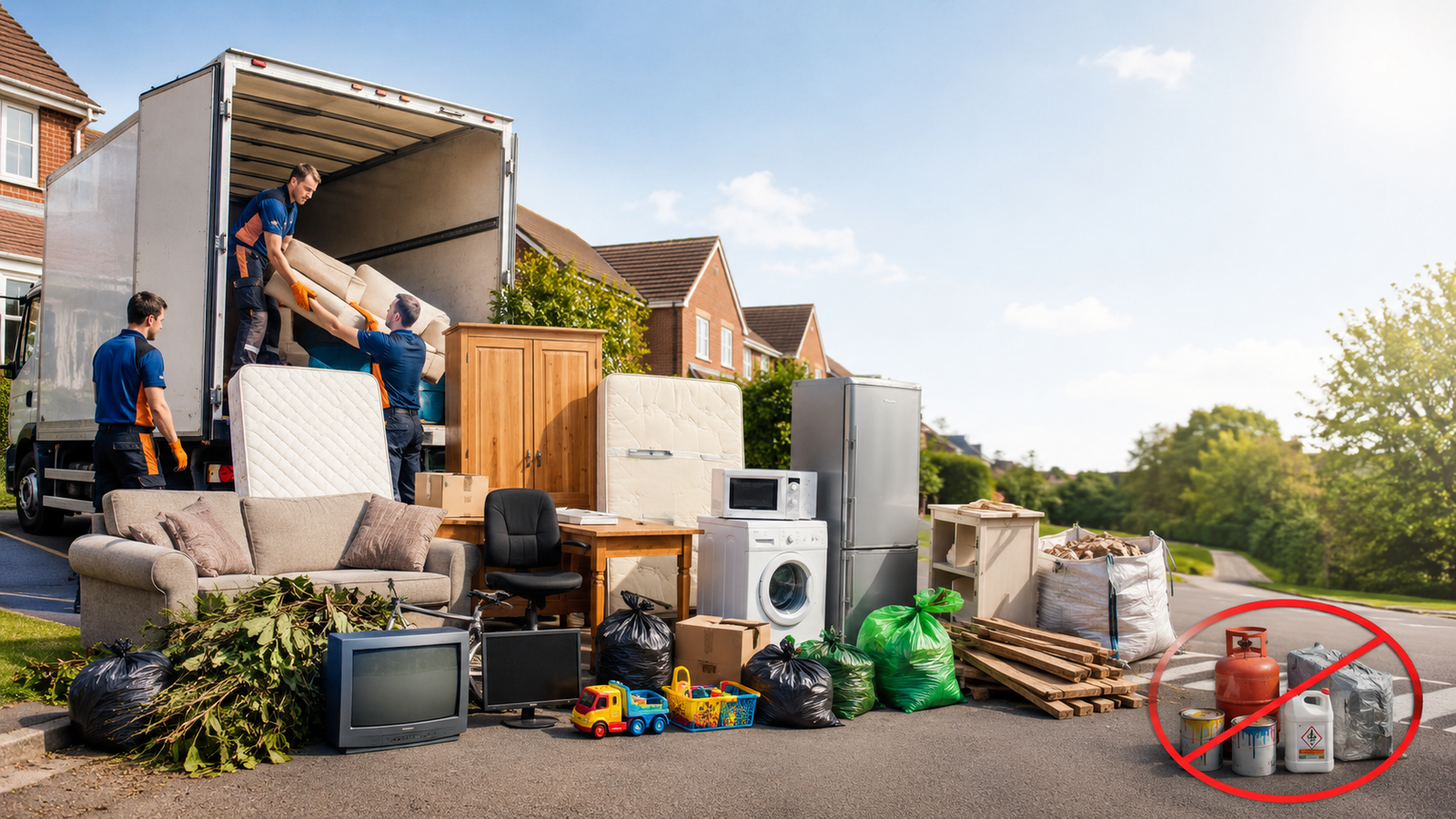
What Can a Waste Removal Company Take? Most waste removal companies can collect household rubbish, furniture, appliances, garden waste, office waste, and construction debris. However, hazardous materials such as asbestos, chemicals, paint, gas cylinders, and certain batteries usually require specialist disposal, making it important to know what can and can’t be collected before booking a service.
Items a Waste Removal Company Can Collect at a Glance
One of the biggest misconceptions about waste removal services is that they only collect general household rubbish. In reality, most licensed waste removal companies can remove a wide variety of non-hazardous items from homes, gardens, offices, and construction sites. Whether you’re clearing out a single room or tackling a full property clearance, knowing what’s accepted can save you time and help you plan your collection more effectively.
The table below provides a quick overview of the types of waste a professional waste removal company can typically collect. Keep in mind that accepted items may vary slightly between providers, so it’s always worth confirming if you have unusual or specialist waste.
If you’re wondering what can a waste removal company take, the answer includes everything from household rubbish and furniture to appliances, garden waste, office equipment, and construction debris.
| Category | Common Items | Usually Accepted |
|---|---|---|
| Household Waste | General rubbish, cardboard, clothing, toys, household clutter | ✅ |
| Furniture | Sofas, beds, wardrobes, tables, chairs, mattresses | ✅ |
| Appliances (White Goods) | Washing machines, fridges, freezers, cookers, dishwashers, microwaves | ✅ |
| Garden Waste | Grass cuttings, branches, leaves, hedge trimmings, fencing | ✅ |
| Construction & DIY Waste | Bricks, rubble, concrete, plasterboard, timber, tiles | ✅ |
| Office Waste | Desks, office chairs, filing cabinets, computers, printers | ✅ |
| Hazardous Waste | Asbestos, chemicals, paint, gas cylinders, medical waste | ❌ |
What Can a Waste Removal Company Take?
One of the reasons professional waste removal services have become so popular is their flexibility. Unlike regular household bin collections, a waste removal company can usually collect a wide range of bulky, unwanted, and difficult-to-dispose-of items in a single visit.
Whether you’re clearing a home, renovating a property, upgrading office equipment, or tidying up your garden, most licensed waste removal companies can handle the job safely and responsibly. Below are the most common types of waste that are typically accepted.
Household Waste
Household waste is one of the most common reasons people book a waste removal service. If you’ve accumulated unwanted items over time or you’re preparing for a move, renovation, or house clearance, a professional team can quickly remove the clutter without you having to make multiple trips to a recycling centre.
Common household waste includes:
- Cardboard and packaging
- Clothing and textiles
- Toys and household clutter
- Kitchenware and small household items
- General non-hazardous rubbish
- Boxes and unwanted belongings
If your home is starting to feel overcrowded, a single collection can often clear months—or even years—of accumulated waste in just one visit.
Furniture
Old or bulky furniture can be difficult to move, especially if you don’t have the right vehicle or extra help. Fortunately, most waste removal companies regularly collect unwanted furniture from homes, flats, offices, and rental properties.
Typical furniture items include:
- Sofas and armchairs
- Beds and mattresses
- Wardrobes
- Dining tables
- Coffee tables
- Desks
- Cabinets
- Bookcases
- Office chairs
Whenever possible, reusable furniture may be separated for reuse or recycling, helping to reduce landfill waste.
Appliances (White Goods)
Large household appliances, often called white goods, are another category commonly accepted by waste removal companies. These items can be heavy, awkward to transport, and may require responsible recycling due to the materials they contain.
Most companies can collect:
- Washing machines
- Fridges and freezers
- Cookers and ovens
- Dishwashers
- Tumble dryers
- Microwaves
- Small kitchen appliances
Some appliances, particularly refrigeration units, require specialist processing, so it’s always worth mentioning these items when requesting a quote.
Garden Waste
Garden projects often create more waste than expected. From hedge trimming to complete landscape renovations, a garden waste removal service can save you multiple journeys to the local recycling centre.
Common garden waste includes:
- Grass cuttings
- Hedge trimmings
- Branches
- Leaves
- Plants and shrubs
- Timber fencing
- Garden furniture
- Soil and small amounts of green waste
For larger landscaping projects involving significant amounts of soil or hardcore, it’s always best to confirm acceptance with your provider before booking.
Construction & DIY Waste
Home improvements and renovations can leave behind heavy materials that aren’t suitable for regular household collections. Many waste removal companies can collect construction and DIY waste, making post-project clean-up much easier.
Items typically accepted include:
- Bricks
- Rubble
- Concrete
- Tiles
- Timber
- Plasterboard
- Doors and windows
- Flooring materials
- Bathroom and kitchen fittings
For very large renovation projects where waste accumulates over several weeks, skip hire may also be worth considering. However, for one-off clearances, professional waste removal is often the faster and more convenient option.
Office & Commercial Waste
Businesses also rely on commercial waste removal services when relocating, renovating, or replacing office equipment. A professional collection helps minimise disruption while ensuring unwanted items are disposed of responsibly.
Common commercial waste includes:
- Office desks
- Chairs
- Filing cabinets
- Shelving units
- Computers and monitors
- Printers
- Cardboard packaging
- Office furniture
- General commercial waste
What Can’t a Waste Removal Company Take?
While waste removal companies can collect a wide range of household, commercial, and construction waste, there are some items that cannot be removed as part of a standard waste removal service. After understanding what can a waste removal company take, it’s equally important to know which materials require specialist handling. Hazardous items can pose risks to people, the environment, and waste processing facilities, so they cannot be collected through a standard service.
If you’re planning a collection, it’s always worth checking whether any restricted items are included. A quick conversation with your waste removal provider can save time, prevent delays, and ensure everything is disposed of safely and in line with UK regulations.
Items Most Waste Removal Companies Don’t Accept
| Item | Usually Accepted | Reason |
|---|---|---|
| Asbestos | ❌ | Requires specialist licensed removal due to health risks. |
| Paint, Solvents & Chemicals | ❌ | Classified as hazardous waste and needs specialist disposal. |
| Gas Cylinders & Propane Bottles | ❌ | Pressurised containers present a fire and explosion risk. |
| Medical or Clinical Waste | ❌ | Must be handled under strict health and safety regulations. |
| Petrol, Diesel & Engine Oil | ❌ | Hazardous liquids require specialist waste treatment. |
| Explosives & Fireworks | ❌ | Cannot be transported through standard waste removal services. |
| Large Quantities of Batteries | ❌ | Many batteries contain hazardous materials and require dedicated recycling. |
| Radioactive Materials | ❌ | Specialist licensed disposal is legally required. |
How Do Waste Removal Companies Dispose of Collected Waste?
Choosing a licensed waste removal company isn’t just about getting rid of unwanted items, it’s also about ensuring your waste is handled responsibly after it leaves your property. Once you know what can a waste removal company take, it’s worth understanding what happens to those items after collection. Reputable waste removal companies follow strict UK environmental regulations to minimise landfill waste and maximise recycling and reuse wherever possible.
Rather than taking everything to landfill, collected waste is typically sorted at licensed waste transfer facilities. Materials that can be recycled or reused are separated, while only non-recyclable waste is sent for final disposal. This process helps protect the environment and supports a more sustainable approach to waste management.
What Happens to Your Waste?
Although the exact process may vary between providers, most professional waste removal companies follow these steps:
- Collection from Your Property
Your unwanted items are collected by a trained waste removal team and loaded safely onto the vehicle. - Transport to a Licensed Waste Transfer Facility
The waste is taken to an authorised facility where it can be inspected and processed. - Sorting and Separation
Materials such as wood, metal, cardboard, plastics, glass, textiles, and electrical items are separated for recycling or reuse whenever possible. - Recycling and Reuse
Recyclable materials are sent to specialist recycling facilities, while reusable items may be repaired, donated, or repurposed where appropriate. - Responsible Disposal
Any remaining non-recyclable waste is disposed of in accordance with UK environmental regulations, helping to minimise the amount sent to landfill.
Why Choosing a Licensed Waste Carrier Matters
Not every company advertising waste removal operates legally. Hiring an Environment Agency-registered waste carrier gives you confidence that your waste will be transported and disposed of responsibly.
A licensed provider helps ensure:
- Waste is disposed of legally.
- Recyclable materials are diverted from landfill whenever possible.
- Fly-tipping and illegal dumping are avoided.
- Environmental regulations are followed.
- You receive a professional and reliable service.
If your waste is handled by an unlicensed carrier and later fly-tipped, you could still face investigation or penalties. That’s why it’s always worth checking that the company is properly registered before booking a collection.
Common Questions About Waste Removal
Can a Waste Removal Company Collect Furniture?
Yes. If you’re wondering what can a waste removal company take, furniture is one of the most commonly collected items. Most waste removal companies can remove a wide range of unwanted furniture from homes, flats, offices, and commercial properties. Whether you’re replacing a single sofa or clearing an entire property, bulky furniture can usually be removed without the need to hire a skip.
Common furniture items include:
- Sofas and armchairs
- Beds and mattresses
- Wardrobes
- Tables and desks
- Chairs
- Cabinets and bookcases
- Office furniture
If the furniture is still in good condition, some companies may also prioritise reuse or recycling where possible.
Can They Remove Washing Machines and Fridges?
Yes. Most licensed waste removal companies can collect large household appliances, including washing machines, fridges, freezers, cookers, dishwashers, and tumble dryers.
Because appliances such as fridges and freezers contain refrigerants that require specialist processing, they are typically taken to authorised recycling facilities for safe disposal in accordance with UK environmental regulations.
Can They Collect Builders’ Waste?
Yes. Many waste removal companies offer collection services for construction and DIY waste, making them a convenient alternative to skip hire for smaller renovation projects.
Builders’ waste commonly includes:
- Bricks and rubble
- Concrete
- Tiles
- Timber
- Plasterboard
- Flooring materials
- Bathroom and kitchen fittings
For large-scale construction projects generating significant amounts of waste over several weeks, skip hire may be a more suitable option.
Do Waste Removal Companies Recycle?
Yes. After understanding what can a waste removal company take, many people also want to know what happens to those items once they’re collected. Reputable waste removal companies aim to recycle or reuse as much of the collected waste as possible. After collection, waste is transported to licensed waste transfer facilities where recyclable materials such as wood, metal, cardboard, plastics, glass, and electrical items are sorted before being sent for recycling.
Only materials that cannot be recycled or recovered are typically sent for final disposal, helping to reduce landfill and support more sustainable waste management.
Can Hazardous Waste Be Collected?
Generally, no. Standard waste removal services are designed for non-hazardous waste. Items such as asbestos, chemicals, paint, medical waste, gas cylinders, and radioactive materials usually require specialist handling and cannot be collected during a regular waste removal appointment.
If you’re unsure whether an item is classified as hazardous, contact your waste removal provider before booking. They can advise you on the appropriate disposal method.
How Much Waste Can Be Collected in One Visit?
The amount of waste that can be collected depends on the size of the removal vehicle and the service you’ve booked. Many waste removal companies can collect anything from a few individual items to the contents of an entire house, garage, office, or garden in a single visit.