
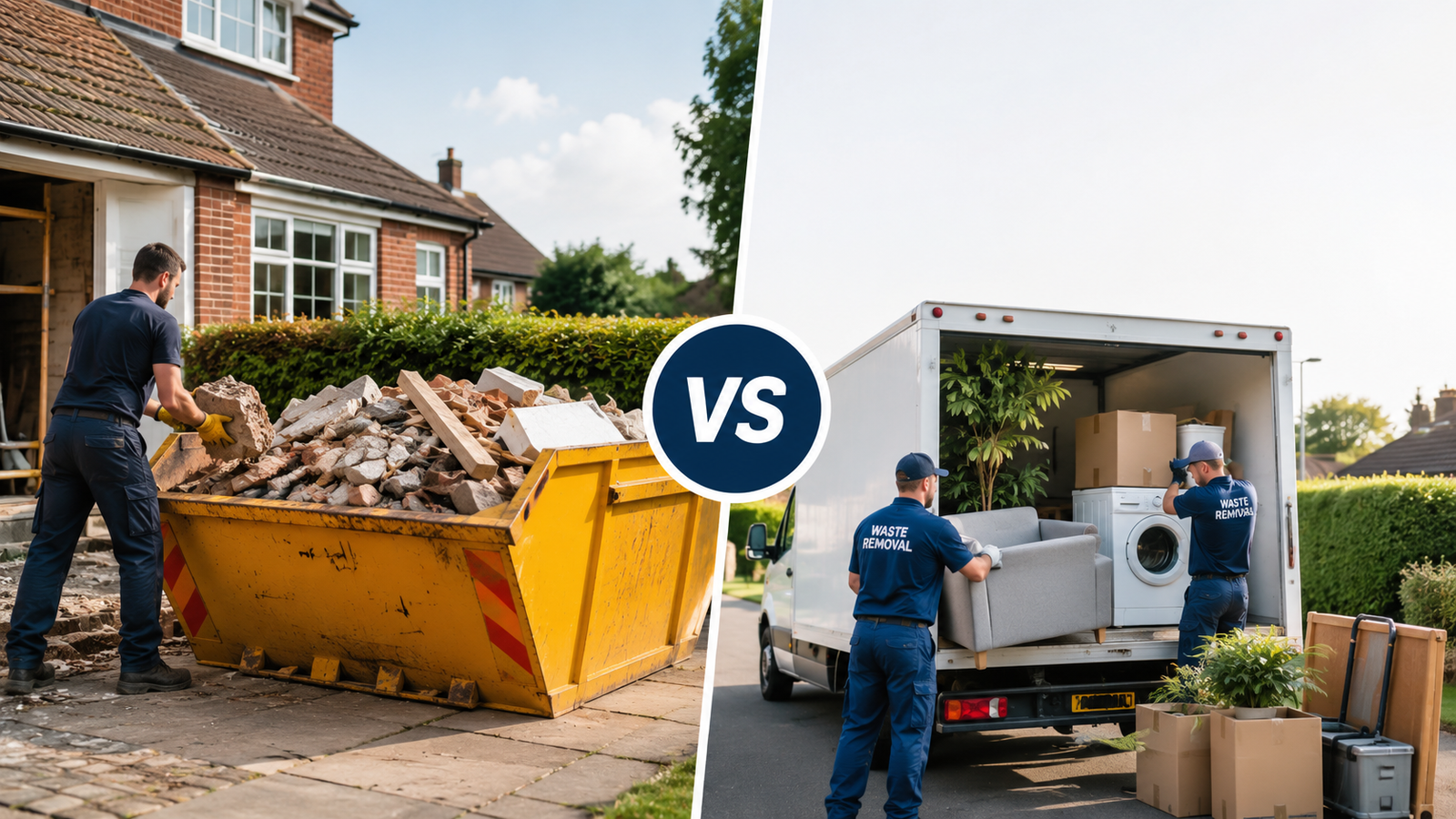
If you’re deciding between skip hire vs waste removal, the right choice depends on the type and amount of waste you need to dispose of. Skip hire is often better for ongoing renovation or construction projects where waste builds up over several days. Waste removal, on the other hand, is ideal for fast, hassle-free collection, as a professional team loads and removes everything for you. If convenience, speed, and avoiding heavy lifting are your priorities, waste removal is usually the better option.
Skip Hire vs Waste Removal: Comparison Table
| Feature | Skip Hire | Waste Removal |
|---|---|---|
| Best For | DIY renovations, construction projects, and ongoing waste disposal over several days. | House clearances, bulky items, garden waste, furniture, appliances, and same-day rubbish collection. |
| Cost | Usually a fixed price based on skip size, hire period, and permit requirements. | Typically priced according to the volume and type of waste collected, so you only pay for what is removed. |
| Loading | You load the skip yourself. | A professional team handles all the lifting, loading, and removal. |
| Collection Time | The skip is delivered and collected on scheduled dates, often after several days. | Waste is usually collected and removed during the same visit, with many providers offering same-day or next-day service. |
| Permit Required | Yes, if the skip is placed on a public road. No permit is usually needed for private property. | No. Waste removal vehicles load the waste and leave immediately, so road permits are generally not required. |
| Heavy Lifting | Required, as you are responsible for filling the skip. | Not required. The removal team does the heavy lifting for you. |
| Environmental Disposal | Waste should be handled by a licensed skip hire company, with recyclable materials separated where possible. | Licensed waste removal companies sort, recycle, and dispose of waste responsibly in line with UK regulations. |
| Ideal Waste Types | Construction debris, soil, bricks, concrete, roofing materials, and large DIY waste. | Household rubbish, furniture, appliances, office waste, garden waste, and general bulky waste. |
What Is the Difference Between Skip Hire and Waste Removal?
At first glance, skip hire and waste removal might seem like the same service, they both help you get rid of unwanted rubbish. However, the way they work, the level of convenience they offer, and the types of projects they’re best suited for are quite different.
The biggest difference is simple. Skip hire is a self-service option, meaning a skip is delivered to your property, and you’re responsible for loading it yourself. Waste removal is a full-service solution, where a professional team collects, loads, and disposes of your waste on your behalf.
Choosing the right option depends on several factors, including the amount of waste, the type of materials you’re disposing of, your budget, and whether you’re happy to do the heavy lifting yourself.
What Is Skip Hire?
Skip hire is a waste disposal service where a large container (known as a skip) is delivered to your property for a set hire period. You fill the skip at your own pace, and once you’re finished, the provider collects it and transports the waste for sorting, recycling, and disposal.
Skip hire is commonly used for:
- Home renovations and DIY projects
- Construction and demolition waste
- Garden landscaping projects
- Roofing and extension work
- Large volumes of heavy materials such as bricks, soil, and concrete
One advantage of skip hire is flexibility. If your project lasts several days or even weeks, you can continue adding waste whenever it’s convenient. However, you’ll need enough space for the skip, and if it’s placed on a public road, your local council may require a permit.
What Is Waste Removal?
Waste removal is a professional collection service where a trained team comes to your property, loads the waste into their vehicle, and removes it immediately. You don’t need to hire a skip, organise permits, or lift heavy items yourself.
Waste removal is often the better choice for:
- House clearances
- Old furniture removal
- Appliance disposal
- Garden waste collection
- Office clearances
- General household rubbish
- Same-day waste collection
One of the biggest advantages is convenience. Instead of spending time loading a skip, the removal team handles everything for you, making it an excellent option for bulky items, limited-access properties, or situations where you need rubbish cleared quickly.
Expert Tip: If your waste will build up over several days during a renovation, skip hire can be a practical solution. However, if you simply want everything removed quickly with minimal effort, professional waste removal is usually the faster and more convenient option.
Skip Hire vs Waste Removal: Which Should You Choose?
Choosing between skip hire and waste removal isn’t about which service is better overall—it’s about which one suits your project. Both have their advantages, but the right choice depends on factors like the type of waste, how quickly you need it removed, the amount of physical work you’re willing to do, and whether you have space for a skip.
If you’re still unsure, use the guide below to decide which option best fits your situation.
Choose Skip Hire If…
Skip hire is usually the better option if your project generates waste gradually rather than all at once. It’s particularly useful for construction work or long-term renovations where you’ll be adding debris over several days.
Choose skip hire if you:
- Are carrying out a home renovation or DIY project.
- Need to dispose of large amounts of construction waste, such as bricks, concrete, soil, or rubble.
- Have enough private space to place a skip.
- Don’t mind loading the waste yourself.
- Want to dispose of waste over several days instead of in a single visit.
For ongoing building projects, skip hire can be a practical and cost-effective solution because you have the flexibility to fill the skip at your own pace.
Choose Waste Removal If…
Waste removal is the better choice when convenience, speed, and minimal effort are your priorities. Instead of hiring a skip and doing all the lifting yourself, a professional team collects, loads, and removes the waste in one visit.
Choose waste removal if you:
- Need same-day or next-day waste removal.
- Are clearing a house, garage, loft, office, or garden.
- Want to dispose of old furniture or household appliances.
- Have bulky or heavy items that are difficult to move.
- Don’t have space for a skip or don’t want to arrange a road permit.
- Prefer professionals to handle all the lifting and loading.
For most homeowners, professional waste removal is often the quicker and more convenient option, especially when clearing bulky household waste or preparing a property for sale, renovation, or moving.
Our Recommendation: If your waste is produced over several weeks during a building project, skip hire is likely to be the more practical choice. However, if you want a fast, hassle-free solution where everything is collected and removed in a single visit, professional waste removal is usually the better option for both convenience and time savings.
Pros and Cons
Both skip hire and waste removal are effective ways to dispose of unwanted rubbish, but each comes with its own advantages and limitations. Understanding the pros and cons of each service can help you make a more informed decision based on your project, budget, and how quickly you need the waste removed.
Skip Hire Pros & Cons
If you’re managing a renovation, construction project, or any job that produces waste over several days, skip hire offers flexibility. However, it also requires more effort on your part.
Pros of Skip Hire
- Ideal for ongoing DIY, renovation, and construction projects.
- Available in various skip sizes to suit different amounts of waste.
- Lets you dispose of waste gradually over the hire period.
- Suitable for heavy materials such as bricks, rubble, soil, and concrete.
- Can be cost-effective for projects generating large volumes of waste.
Cons of Skip Hire
- You must load the skip yourself, which can be physically demanding.
- A council permit may be required if the skip is placed on a public road.
- You’ll need enough space on your property to accommodate the skip.
- Certain items, such as hazardous waste, electrical appliances, and tyres, may require special disposal or may not be accepted.
- You’re paying for the entire skip, even if you don’t fill it completely.
5.2 Waste Removal Pros & Cons
For homeowners and businesses looking for a fast and convenient solution, professional waste removal eliminates much of the work involved. A trained team handles the lifting, loading, transport, and responsible disposal, making it one of the easiest ways to clear unwanted waste.
Pros of Waste Removal
- No heavy lifting, professionals load and remove everything for you.
- Same-day or next-day collection is often available.
- No skip or road permit is usually required.
- Ideal for furniture removal, appliance disposal, house clearances, garden waste, and general household rubbish.
- You typically pay based on the amount of waste collected rather than hiring an entire skip.
- Licensed waste carriers sort, recycle, and dispose of waste responsibly.
Cons of Waste Removal
- Less suitable for long-term projects where waste accumulates over several weeks.
- Very large construction projects may be more economical with a skip, depending on the volume of waste.
- Collection appointments must usually be booked in advance, although many companies offer flexible scheduling.
Bottom Line: If your project produces waste over time and you’re comfortable loading it yourself, skip hire can be a practical choice. However, if convenience, speed, and professional handling matter most, waste removal is often the better solution for homes, offices, and one-off clearances.
Common Questions About Skip Hire and Waste Removal
Is waste removal cheaper than skip hire?
It depends on the amount and type of waste you need to dispose of. Waste removal is often more cost-effective for small to medium-sized jobs because you typically pay for the volume of waste collected. Skip hire can offer better value for large renovation or construction projects that generate waste over several days. Rather than focusing solely on price, consider the total cost, including skip permits, labour, and the time required to load the waste yourself.
Do I need a permit for skip hire?
A permit is usually only required if the skip is placed on a public road or pavement. If the skip is kept on private property, such as a driveway, a permit is generally not needed. Permit requirements vary between local councils, so it’s always worth checking before booking.
What types of waste can a waste removal company collect?
Most waste removal companies collect a wide range of non-hazardous waste, including:
- Household rubbish
- Old furniture
- Appliances and white goods
- Garden waste
- Office furniture
- General bulky waste
- Construction debris (subject to local regulations)
Some hazardous materials, such as asbestos, chemicals, paint, and certain batteries, require specialist disposal and cannot be collected as part of a standard waste removal service.
Which option is better for furniture and appliance removal?
For furniture removal and appliance disposal, professional waste removal is usually the better option. The removal team handles all the lifting, loading, and transportation, saving you time and reducing the risk of injury. It’s particularly useful for bulky items like sofas, wardrobes, washing machines, and refrigerators.
Is skip hire or waste removal better for home renovations?
The best choice depends on how your project is managed. If you’re carrying out a renovation over several days or weeks and expect waste to build up gradually, skip hire offers greater flexibility. However, if you’ve already completed the work and simply want everything cleared away quickly, waste removal is often the faster and more convenient solution.
Which option is more environmentally friendly?
Both services can support responsible waste management when you choose a licensed waste carrier. Reputable skip hire and waste removal companies sort collected materials, recycle eligible waste, and dispose of non-recyclable items in accordance with UK environmental regulations. Before booking, it’s always a good idea to confirm that the provider is registered and committed to responsible waste disposal practices.
Key Takeaways
If you’re still deciding between skip hire and waste removal, here are the most important points to remember:
- Skip hire is best for long-term DIY, renovation, and construction projects where waste builds up over several days or weeks.
- Waste removal is ideal for fast, hassle-free rubbish collection, with professionals handling all the lifting, loading, and responsible disposal.
- If you don’t have space for a skip or want to avoid arranging a road permit, waste removal is usually the more convenient option.
- Skip hire is better suited for large volumes of heavy materials like bricks, concrete, soil, and construction debris, while waste removal is perfect for household rubbish, furniture, appliances, garden waste, and general bulky items.
- Both services can be environmentally responsible when you choose a licensed waste carrier that prioritises recycling and compliant waste disposal.
- The right choice ultimately depends on your project’s size, the type of waste you’re disposing of, your budget, and how quickly you need everything cleared.
Final Recommendation: If your priority is convenience, speed, and avoiding heavy lifting, professional waste removal is often the best solution. For ongoing renovation or construction work where waste accumulates over time, skip hire is usually the more practical choice.